
Best portable power banks for camping trips come down to one thing: matching capacity, ports, and durability to what you actually carry, not what a spec sheet says. If your phone dies by day two, your headlamp drains overnight, or your GPS struggles in the cold, the “wrong” power bank can feel like extra weight instead of a backup plan.
It’s also easy to buy based on a single number, usually mAh, and end up disappointed. Real-world output (in watt-hours), charging speed, cable choices, and temperature behavior matter more in the woods than they do at a desk.
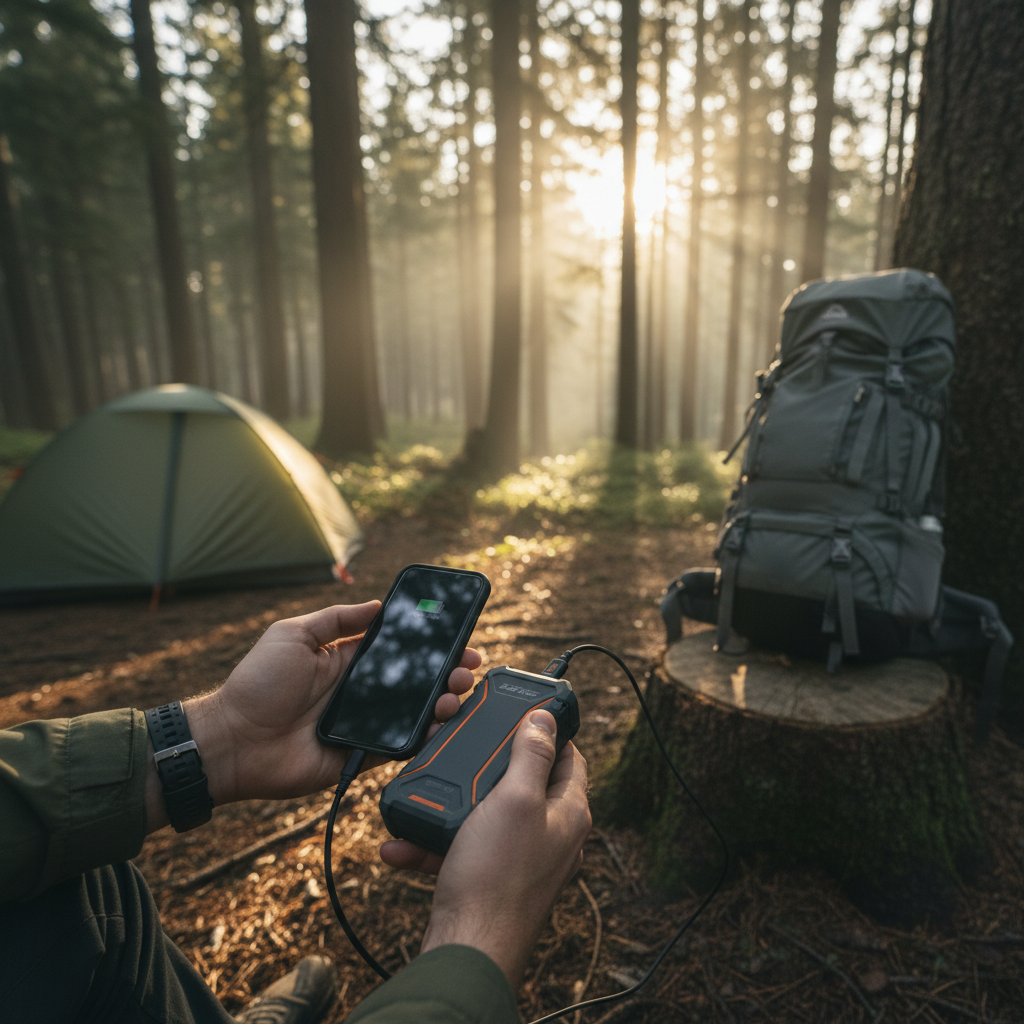
This guide focuses on how to choose, what specs actually mean on trail, and a few practical “buying lanes” so you can pick confidently. You’ll also get a simple table, a packing checklist, and a few mistakes people repeat every season.
What matters most in a camping power bank (beyond the marketing)
If you only remember three specs, make them these: watt-hours (Wh), USB-C PD wattage, and port mix. mAh is fine for comparing within one battery voltage, but Wh tells the more honest story across products.
- Capacity (Wh) for real planning: Many banks list mAh at 3.7V cell voltage, while your devices charge around 5V or higher, so usable capacity drops after conversion losses. A “20,000 mAh” bank often yields less than people assume.
- Output power (watts): For phones, 18–30W is comfortable. For tablets, 30–45W feels normal. For some ultralight laptops, 45–100W matters.
- Ports and cable reality: If your headlamp uses USB-C but your radio uses micro-USB, a single-port bank becomes annoying fast.
- Weight and shape: Long, brick-style banks ride differently in a pack than flatter models. That comfort factor is real on multi-day hikes.
- Durability: Look for reinforced shells, good port strain relief, and basic ingress protection if you expect rain or dusty trails. Ratings vary a lot by brand and price.
According to the U.S. Consumer Product Safety Commission (CPSC), lithium-ion batteries can pose fire risks when damaged, overheated, or used with incompatible chargers, so build your choice around safe charging behavior, not just “more capacity.”
Quick self-check: which type of power user are you?
Most people don’t need a “monster” bank, they need the right match. Use this quick check to place yourself.
- Weekend minimalist: phone on airplane mode, a headlamp, maybe a small camera. You mainly need 1–2 full phone refills.
- Navigation-heavy hiker: phone/GPS running for hours daily, screen brightness up, cold mornings. You need extra buffer and faster recharge stops.
- Group charger: family trip, multiple phones, maybe a Bluetooth speaker. Ports and simultaneous charging matter.
- Creator / remote worker: action cam batteries, drone batteries (often need their own charger), sometimes a laptop. You need higher watt USB-C PD and more total Wh.
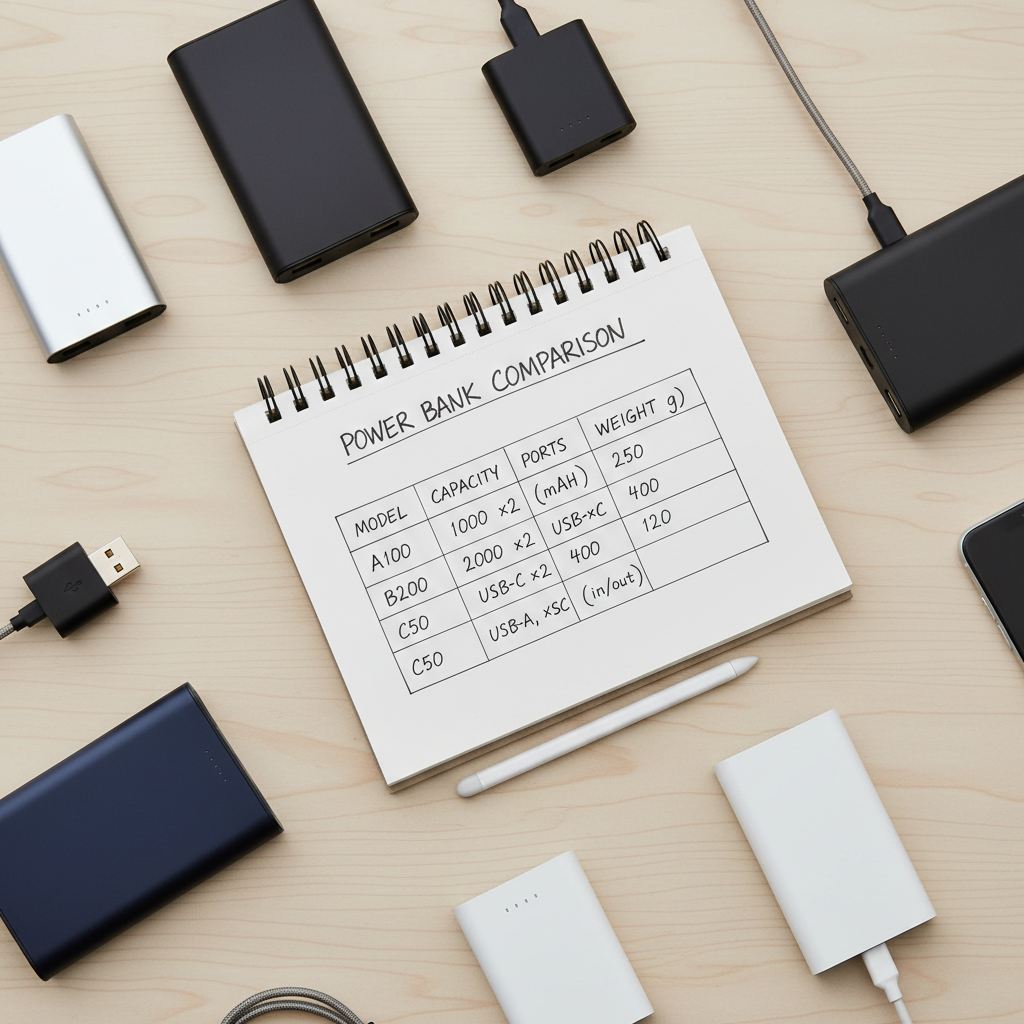
If you read that and thought “I’m two of these,” that’s normal. In that case, choose based on your highest-drain day, not your average day.
How much capacity do you really need? (simple math, honest expectations)
Here’s the practical way to size the best portable power banks for camping trips: plan in Wh, then assume you only get about 60–80% of the printed capacity as useful charging, depending on temperature, cable quality, and conversion losses.
A simple rule of thumb
- 1–2 nights: ~10,000–15,000 mAh (or ~37–55 Wh) if it’s mainly one phone + headlamp.
- 2–4 nights: ~20,000–26,800 mAh (or ~74–99 Wh) for phone navigation, multiple devices, or a couple people sharing.
- Longer trips: consider either a larger bank plus a solar panel (if you have sun and time), or two medium banks for redundancy and packing flexibility.
Cold is the sneaky variable. Lithium batteries can deliver less power in low temperatures, so in shoulder seasons, you may want extra buffer and to store the bank in a warmer pocket or sleeping bag at night.
Best portable power banks for camping trips: recommendations by scenario
Rather than a single “top pick,” it’s more realistic to choose within a scenario. Brands change models often, but these lanes stay consistent.
| Scenario | Target capacity | Output/ports to look for | Why it works |
|---|---|---|---|
| Ultralight weekend hike | 10,000–15,000 mAh | USB-C in/out, 18–30W | Light, fast enough for a phone, minimal cable clutter |
| Navigation-heavy 3-day trip | 20,000–26,800 mAh | USB-C PD 30–45W, 2–3 total ports | More buffer, faster top-offs during short breaks |
| Two people sharing | 20,000+ mAh | At least 2 outputs, good combined wattage | Less “charging queue” at camp, fewer arguments |
| Tablet + camera batteries | 20,000–30,000 mAh | USB-C PD 45W, plus USB-A for legacy gear | Handles higher draw devices and mixed cables |
| Light laptop support | 24,000–30,000 mAh (90–100 Wh class) | USB-C PD 65–100W, verified laptop compatibility | Keeps a laptop alive for short work blocks, not all-day use |
For most hikers, the sweet spot is a 20,000 mAh class bank with USB-C PD. It’s usually the best trade between weight and coverage, which is why it often shows up in “best portable power banks for camping trips” lists.
Charging speed and ports: where people accidentally buy the wrong thing
A big battery that charges slowly can still fail you in practice. The common pain point is arriving at camp with 20% left in the bank because you never had time to refill it properly.
- Prioritize USB-C Power Delivery (PD): PD is the common fast-charging standard for phones, tablets, and many laptops. Look for PD on both input and output if you want the bank to recharge quickly from a wall charger.
- Pay attention to “in” wattage: Some banks output 30–65W but only accept 10–18W input, which makes overnight refills slow.
- Don’t overvalue wireless charging: It’s convenient, but it wastes energy and runs hotter, which can matter at camp.
- Bring the right cable: A cheap cable can limit charging speed even if your bank supports high wattage.
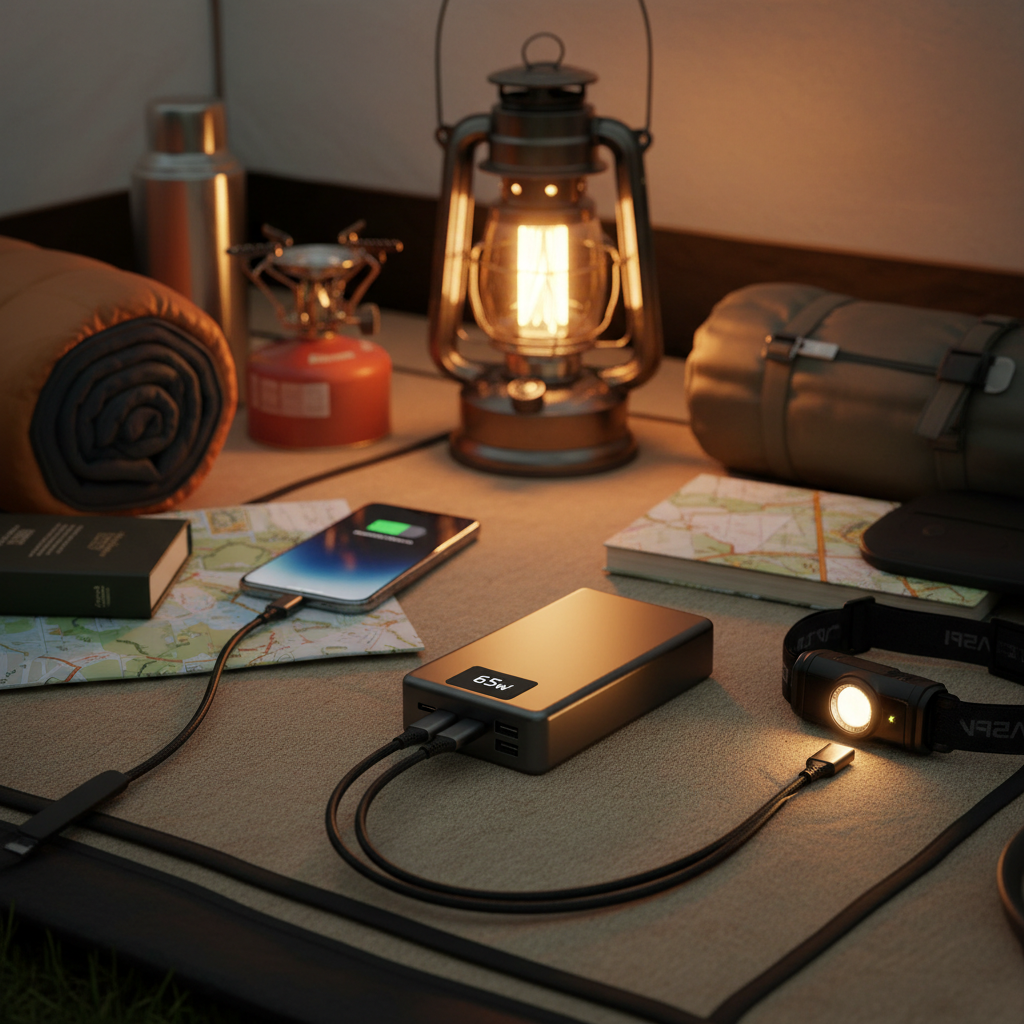
If you use a laptop, check the wattage your laptop expects and whether it charges over USB-C. Some laptops require higher wattage or are picky about PD profiles, so a “big” bank can still disappoint.
Durability and safety in the outdoors (small habits that matter)
Outdoor charging adds moisture, dust, impacts, and temperature swings. The bank doesn’t need to be indestructible, but your routine should be conservative.
- Keep it dry and clean: Use a zip pouch or dry bag in rain, and avoid charging on bare dirt where grit can work into ports.
- Avoid heat buildup: Don’t leave it baking on a dashboard or in direct sun at camp. Lithium packs can degrade faster with repeated heat exposure.
- Inspect for damage: If the case is cracked, swelling appears, or it smells odd, stop using it and consider recycling guidance locally. If you’re unsure, ask a professional retailer or local hazardous waste facility.
- Use quality chargers: Cheap wall adapters and unknown cables can run hot or behave unpredictably.
According to the Federal Aviation Administration (FAA), portable chargers are typically allowed in carry-on but restricted in checked baggage, and there are limits based on watt-hours. If you fly to a trailhead, verify your bank’s Wh rating and airline rules before you pack.
Practical packing and usage tips (so your power lasts longer)
This part is less exciting than specs, but it’s where most battery life “appears.” A few small moves can extend your trip power without buying anything new.
- Charge strategy: Top off devices during downtime, not only at night. Short “snack charges” help if your bank supports fast output.
- Phone settings: Airplane mode, low power mode, offline maps, and reduced screen brightness usually save more than people expect.
- Headlamp discipline: Use lower brightness when possible, and avoid leaving it on in a pocket.
- Cold-night routine: Keep your phone and bank warm overnight, even a simple sock inside your sleeping bag helps.
- Redundancy: For longer routes, two smaller banks can be easier to distribute and gives you a backup if one fails.
Key takeaway: The best portable power banks for camping trips are the ones you can recharge quickly, protect easily, and actually carry without resenting the weight.
Conclusion: choosing the right bank without overbuying
If you want the most reliable starting point, choose a reputable 20,000 mAh class power bank with USB-C PD, at least two outputs, and a form factor you won’t hate carrying. Then do one “at-home shakedown” by charging your real devices the way you will on trail, that test usually reveals any port or cable mismatch fast.
If you’re shopping today, make your next step simple: pick your trip length, count devices, check USB-C PD wattage, and confirm you have the cables to match. That’s how you end up with a bank that feels like insurance, not ballast.
FAQ
What is the best portable power bank size for a 2-night camping trip?
Many people do fine with 10,000–15,000 mAh if it’s one phone plus a headlamp, but if you rely on GPS or take lots of photos, a 20,000 mAh class bank feels less stressful.
Are solar power banks worth it for backpacking?
Built-in tiny panels on power banks often charge slowly. A separate foldable solar panel paired with a normal bank can work better in sunny, stationary camps, but cloud cover and tree canopy can limit results.
How many times can a 20,000 mAh power bank charge an iPhone?
It depends on phone model and losses during conversion, so you rarely get the “math-perfect” number. In many cases you might see a few full charges, but cold weather and fast charging can reduce that.
Do I need USB-C PD for camping?
If you only charge a phone overnight, you can get by without it. If you want quicker top-offs during breaks, share power with others, or charge tablets, USB-C PD is usually worth prioritizing.
Is it safe to charge devices inside a tent?
It can be, but keep the bank on a stable surface, avoid covering it with insulating layers, and stop if you notice unusual heat. If you have concerns about a specific battery model, consult the manufacturer guidance.
What should I look for if I camp in cold weather?
Plan extra capacity and keep the bank warm at night. Cold can reduce available output, so the bank that felt “just enough” in summer might feel tight in late fall.
Can I bring a high-capacity power bank on a plane to my hiking trip?
Often yes within airline limits, but rules are based on watt-hours and can vary. Check the bank’s Wh rating and confirm requirements with your airline before travel.
If you’re trying to choose between two models and the specs feel like alphabet soup, it usually helps to share your device list, trip length, and whether you need USB-C PD for a tablet or laptop, then you can narrow to a sensible capacity and port setup without paying for features you won’t use.