
Best portable power stations for camping comes down to matching your real gear to the right battery size, ports, and charging plan, not buying the biggest box you can afford.
If you have ever watched your phone hit 3% right when you need GPS, or tried to keep a cooler cold while the campsite has zero outlets, you already know why this category matters. A good power station can replace a noisy generator for many weekend setups, and it can also prevent the “I brought power, but not the right kind” mistake.
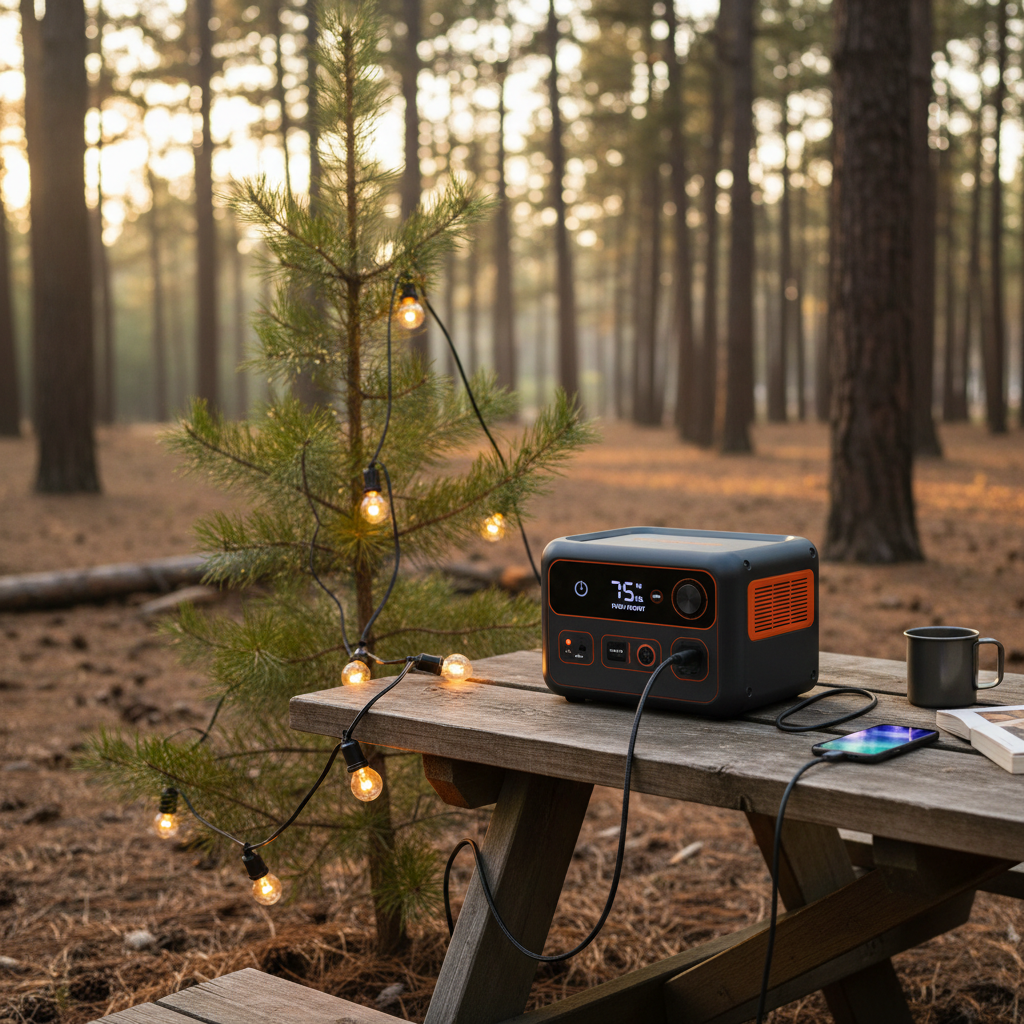
What this guide does is keep you out of spec-sheet rabbit holes. We will translate the numbers into camping outcomes, show quick ways to estimate runtime, and point out safety and convenience details that tend to decide whether you love your purchase or quietly regret it.
What makes a power station “best” for camping (not for marketing)
In camping, “best” usually means quiet, predictable power with minimal fuss. Here are the specs that actually change your trip.
- Battery capacity (Wh): watt-hours is your fuel tank. A 300–600Wh unit often fits light weekend needs, 700–1200Wh covers more devices, and 1500Wh+ starts to support bigger loads like some electric coolers or longer trips.
- Inverter output (W): watts is what you can run at one time. A high-capacity battery with a weak inverter still cannot run a kettle or higher-draw appliances.
- Surge rating: some gear spikes when it starts. If you plan to run anything with a motor, build in headroom.
- Ports that match your setup: USB-C PD for modern phones and laptops, 12V car-style outputs for coolers, and AC outlets only when you truly need them.
- Recharge options: wall charging is easy at home, but car charging and solar input decide whether you can extend a trip.
- Weight and ergonomics: a 45 lb box might be fine for car camping, but annoying for moving around camp.
According to the U.S. Consumer Product Safety Commission (CPSC), lithium-ion battery products can pose fire risk when damaged, used with incompatible chargers, or stored improperly, so build “how you will use it” into the purchase decision, not just the headline capacity.
Quick self-check: choose the right size in 5 minutes
Before you shop, do a rough “what will I actually power” list. Most people overestimate what they need, then under-plan charging.
Step 1: list your typical loads
- Phones, headlamps, watch, camera batteries
- Camp lights (string lights, lanterns)
- CPAP (if applicable, possibly with DC cable)
- Electric cooler or 12V fridge
- Laptop or drone charging
- Occasional small appliance (coffee grinder, blanket, fan)
Step 2: estimate your daily energy use
Use watt-hours if you can find them, or do a simple estimate: Watts × hours ≈ Wh. If you only know amps at 12V, a rough conversion is 12V × amps × hours.
- Two phones: roughly 20–40Wh/day total in many cases
- LED lighting: often 5–30Wh/night depending on brightness and time
- Small 12V cooler: can vary a lot by temperature and insulation, often the biggest wildcard
Then add 15–25% overhead for inverter losses and real-world inefficiency, especially if you use AC outlets a lot.
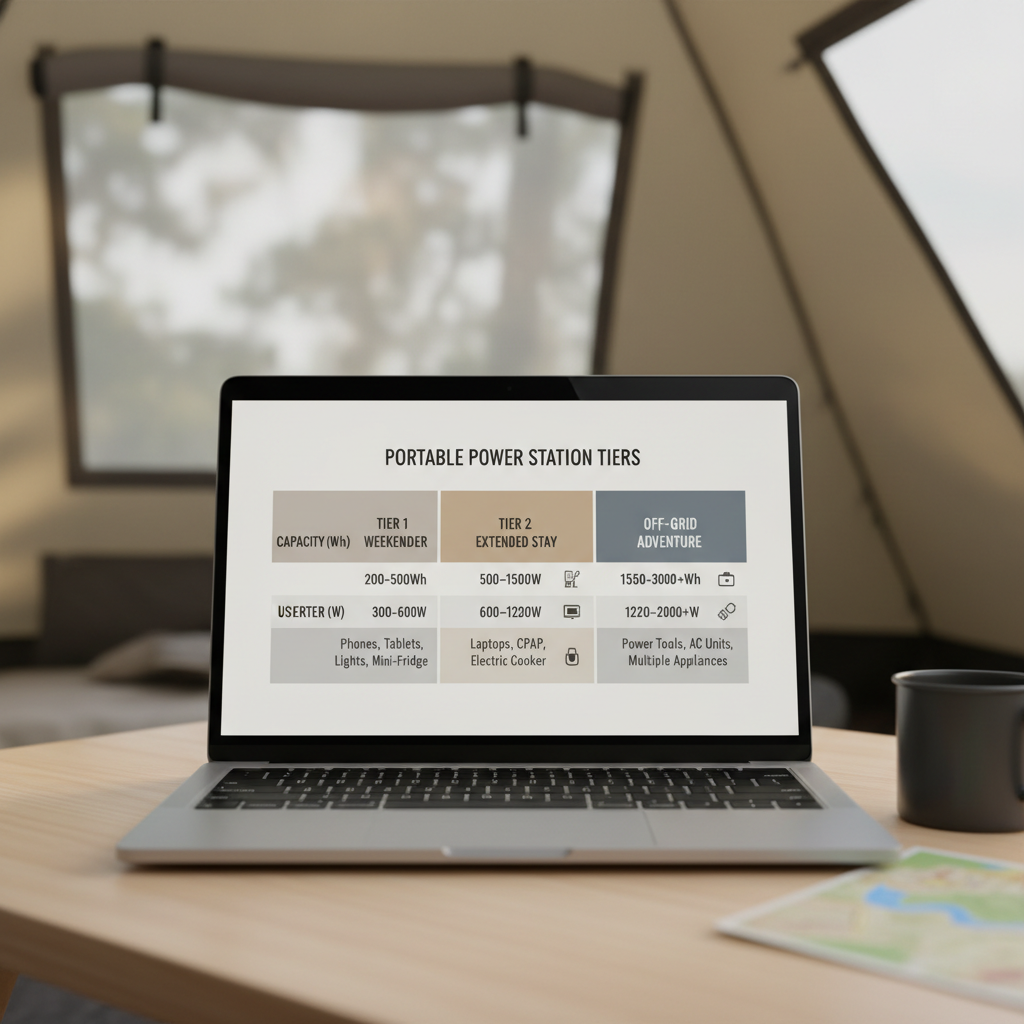
Best portable power stations for camping: feature tiers (and who each tier fits)
Instead of naming a single winner, it is more honest to sort by use case. Many “bad” purchases are simply the wrong tier for the trip style.
| Camping style | Typical capacity | Output targets | What it comfortably powers | Trade-offs |
|---|---|---|---|---|
| Minimalist weekend car camping | 200–400Wh | 150–300W inverter | Phones, lights, camera batteries, small fan | Limited for coolers and laptops |
| Family camp + cooler | 500–1000Wh | 500–1200W inverter | 12V cooler, multiple devices, some laptop use | Heavier, needs a recharge plan |
| Long weekend + higher draw gear | 1000–2000Wh | 1500–2200W inverter | Cooler + cooking gadgets (limited), power tools (light use) | Cost and weight jump, storage space |
| Basecamp / overlanding with solar | 1500–3000Wh | 2000W+ inverter | Multiple days with solar top-ups, heavier device mix | Overkill for casual trips |
If you are searching “best portable power stations for camping” because you want to run cooking appliances, pause and double-check the wattage. Many hot devices like kettles, hot plates, and hair dryers demand more power than people expect, and they can drain even large batteries quickly.
Key features that matter more than brand names
Brand matters for warranty and support, but camping comfort often comes from small details you only notice after a few trips.
- USB-C PD (100W or higher) for modern laptops and fast charging. If you work from camp, this can matter more than extra AC outlets.
- Regulated 12V output for 12V fridges. Some coolers behave better with stable voltage.
- Pass-through charging (use while charging). Handy for solar days, but check the manual because behavior differs by model.
- Low-noise operation. Most power stations are quiet, but fan noise varies under load.
- Cold-weather performance. Lithium batteries can lose effective capacity in cold temperatures. If you camp in shoulder seasons, plan extra margin and keep the unit insulated and dry.
- Battery chemistry. LiFePO4 tends to be favored for cycle life and thermal stability, while NMC can be lighter for the same capacity. Either can be safe when designed and used properly.
Charging plans: wall, car, and solar (what actually works at camp)
A power station that fits your use, but cannot be recharged the way you travel, ends up feeling small. Think of charging as part of the system.
Wall charging at home
This is the simple baseline: charge fully the day before you leave, and you start strong. If a unit supports faster AC input, it can be useful for last-minute top-ups.
Car charging
Car charging is usually slow, but reliable. It is great for topping off during a drive, not always for fully refilling a big battery. If you plan to rely on it, check whether the station supports higher-input options from a 12V socket or dedicated vehicle charging accessories.
Solar charging
Solar can be fantastic for basecamp, but it is also the place where expectations can drift. Panel size, sun angle, shade, cloud cover, and temperature all change results, sometimes dramatically.
- Match panel wattage to your daily use, not just your battery size.
- Check solar input limits (volts/amps) so your panels and station actually pair well.
- Plan for shade: even “partial shade” can cut output more than people expect.
According to the National Renewable Energy Laboratory (NREL), solar output varies with irradiance and environmental conditions, so it is smart to treat solar as “helpful replenishment” unless you have tested your exact setup.
Practical buying checklist (use this before you hit checkout)
This is the quick screen I wish more shoppers used. If you can answer these, you will avoid most mismatches.
- My highest-watt device is ______, rated at ______W, and I will run it for ______ minutes/hours.
- I need DC for a 12V cooler / CPAP / other ______, and I know the connector I need.
- I need USB-C at ______W for laptop/phone fast charge.
- I can recharge via wall / car / solar, and I am okay with the realistic speed.
- Carry style: I can lift ______ lb, and it fits my vehicle storage.
- Weather plan: I can keep it dry, out of direct heat, and not freezing overnight.
Common mistakes (and how to avoid wasting money)
People usually do not buy the “wrong” unit because they ignored specs, they buy it because they interpreted specs the wrong way.
- Confusing watts with watt-hours: high W runs more devices at once, high Wh runs them longer. You often need both, but not always.
- Running everything on AC: using DC and USB when possible is often more efficient and can extend runtime.
- Ignoring cable/adapter reality: some CPAPs need a specific DC cable, and some coolers hate cheap adapters. Budget for proper cables.
- Assuming solar will “keep up”: it might, but shade and short winter days can change the math fast.
- Storing it wrong: avoid leaving it in extreme heat in a vehicle, and do not pack it where it can be crushed or punctured.
For safety, use the manufacturer charger when possible, keep vents clear, and stop using a unit that shows swelling, unusual odor, or physical damage. If you are unsure, it is reasonable to consult the manufacturer or a qualified technician.
Conclusion: how to pick your “best” camping power station
The best portable power stations for camping are the ones that match your actual loads, offer ports you will use every day, and fit a charging plan you can execute without stress. If you are mostly charging small electronics, a lighter mid-capacity unit often feels better than a huge battery you hate moving. If a cooler or CPAP is on the list, size up and prioritize DC options, then test your setup at home once so you are not guessing at camp.
Action steps: write down your top three devices and their watts, choose a capacity tier from the table, then confirm you have the right cables and a realistic recharge method before your next trip.
FAQ
How many watt-hours do I need for weekend camping?
Many weekend car campers land in the 300–600Wh range if they only charge phones, lights, and cameras. If you add an electric cooler or laptop use, 700–1200Wh often feels more forgiving, but your exact runtime depends on weather and habits.
Can a portable power station run a 12V camping fridge?
Usually yes, as long as the station has a stable 12V output and enough watt-hours for your trip length. The fridge’s compressor cycles, so consumption is not constant, and hot weather can increase usage noticeably.
Is LiFePO4 better than lithium-ion for camping?
LiFePO4 is popular because it tends to offer long cycle life and good thermal stability, which many campers like for frequent trips. That said, product design, protections, and how you use it matter as much as chemistry.
What size inverter do I need for camping coffee gear?
It depends on the device. Some small grinders draw little power, while kettles and hot plates can be very high wattage. Check the label and make sure the inverter rating exceeds it with some headroom.
Will solar panels fully recharge my power station in a day?
Sometimes, but it is very dependent on panel wattage, sun hours, and shading. Many setups are great for topping off rather than fully refilling a large battery, especially in forests or short-day seasons.
Is it safe to use a power station inside a tent?
Compared with fuel generators, portable power stations do not produce exhaust, but you still need ventilation for heat and you should keep electronics dry. If your tent is damp or the unit could be knocked over, using it in a sheltered area outside the sleeping space is often safer.
Do I need a pure sine wave inverter for camping?
Many sensitive electronics prefer pure sine wave output, and a lot of reputable stations provide it. If you plan to run medical devices or certain chargers, it is a reasonable feature to prioritize, and if in doubt you should check device guidance or consult a professional.
If you are trying to choose between a couple of sizes and you want a more “no guessing” approach, start from your device list and build a simple day-by-day power budget, then shop for the station that covers that budget with a little breathing room rather than chasing the biggest spec sheet.